A Data Scientist is a professional who not only works with data but also helps organizations make more informed decisions using scientific methods and technologies. The profession of a Data Scientist offers vast opportunities for those who are ready to learn, adapt to new challenges, and apply their skills to solve real-world problems. It is not just a job but a chance to be part of the digital revolution.
Curriculum
- Python: Using Jupyter Notebook, variables, data types, loops, in-depth work with various data types, working with files.
- Python Libraries: Basics of statistics, linear algebra, calculus, probability theory.
- SQL: Basics of syntax, table joins, window functions, ranking functions, offset functions.
- Git and GitHub
- Fundamentals of Machine Learning
- Machine Learning Algorithms: Linear algorithms, decision trees, metric algorithms, cluster analysis.
- File Extraction
- Deep Learning: Theory of differences between DL and ML, neural networks.
- Docker
- Calculus: Graphs and functions.
- Probability Theory: Key definitions, probability properties, conditional probability.
- Bayes' Theorem, Combinatorics
- Packages: Scrapy, BeautifulSoup, Requests (sending HTTP requests to websites, HTML parsing, data retrieval).
- CSV/Excel Files: Reading PDF files, retrieving data from images (Pillow and OpenCV).
- Examples of Work with NLP
- Examples of Work with Computer Vision
Upon graduation of the course you will be able to
- Collect, clean, and transform data.
- Perform data analysis to identify patterns and anomalies.
- Use data visualization to interpret results.
- Master Python fundamentals and work with its core libraries (NumPy, Pandas, Matplotlib).
- Use SQL for database operations, including complex queries and table joins.
- Work with Git and GitHub for project management.
- Apply mathematical methods for data analysis.
- Use probability theory and statistics to build models and make predictions.
- Develop machine learning models, including linear regression, decision trees, and cluster analysis.
- Understand and apply feature scaling and encoding methods.
- Understand the fundamentals of neural networks and implement them using PyTorch.
- Work on Computer Vision and NLP tasks.
- Extract data from websites using tools like Scrapy, BeautifulSoup, and Requests.
- Work with various file formats (CSV, Excel, PDF, images).
- Use Docker for deploying models in production environments.
- Formulate hypotheses and validate them using data.
- Automate analysis and prediction processes.
- Contribute to Data Science projects, providing solutions for business needs.
Forms of study
Group Classes
RM650/month
Classes run in groups of up to 12 students, with 80% hands-on practice and 20% theory. You learn alongside peers, share ideas, and build real projects together.
English
4 months
15-55 years old
2 hours a week
Soho Suites KLCC, 20, Jalan Perak, Kuala Lumpur
Personal Classes (1-on-1)
RM 2 890
One-on-one with your instructor, also 80% hands-on practice and 20% theory — but fully paced around you, with content adjusted to your goals and skill level.
English
8 classes
15-55 years old
80 minutes each class
Soho Suites KLCC, 20, Jalan Perak, Kuala Lumpur
Beginner
RM650/month
RM500/month
Learn the basics, create your first real projects, and earn your certificate—your first step toward becoming a confident IT Specialist!
Start your journey with 4 months of guided online or physical classes, once a week for 3 hours, in small groups up to 12 students.
English
Saturday
14-55 years old
16:00-18:00
Soho Suites KLCC, 20, Jalan Perak, Kuala Lumpur
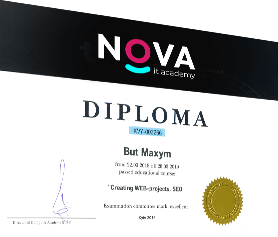


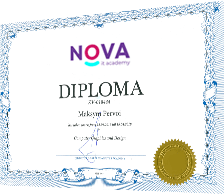

Certificates
IT Nova students receive international diplomas